 Learn Social Simulations
Learn Social Simulations
Learn Social SimulationsExplore the idea of simulations and how they can be used in the classroom.
Understanding the theory behind social simulations will help you to use the Up to You! Simulation in classroom or in a workshop. Game-based learning is immersive and experiential, but participants are often initially skeptical about this method and its effectiveness in teaching and learning. It is up to the moderator to explain why this method is selected.
Moderators who understand the underpinnings of social simulations can also run debriefings more effectively. This is because knowing how social simulations work as an educational tool enables moderators to facilitate deeper, more reflective conversations.
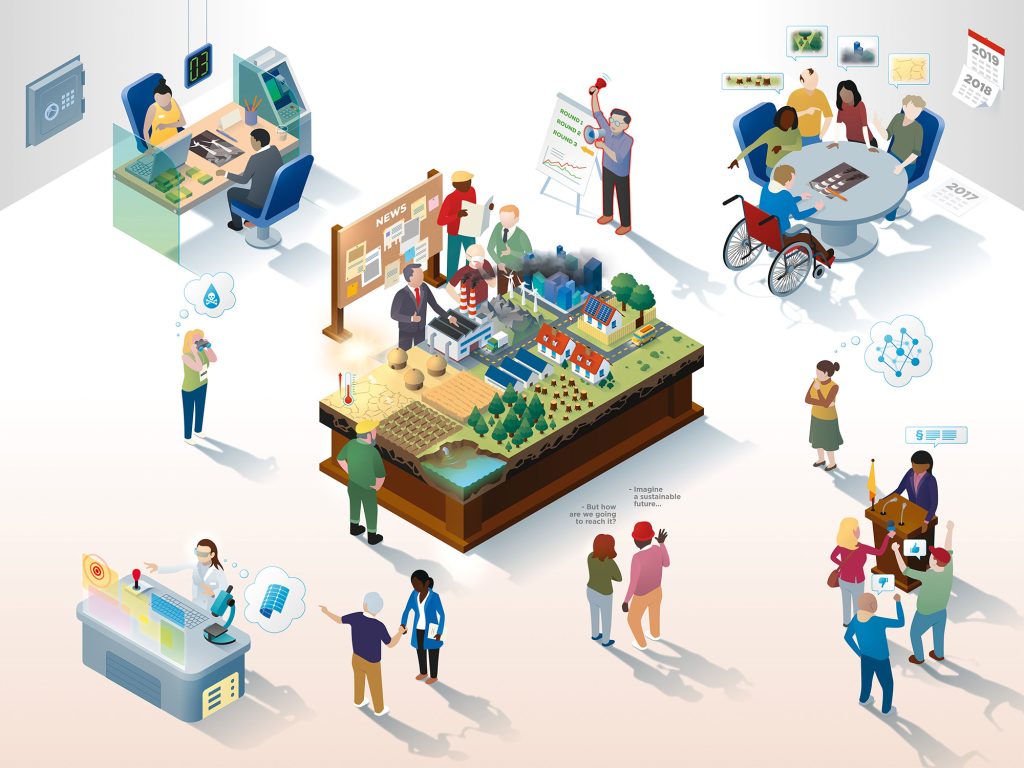
A social simulation is an experiential process where a group of participants collectively explore a complex reality. It is social because it requires the participation of real people who represent different groups and organizations. We call it a simulation because it represents carefully selected real-world structures and processes. The experience is similar to a multi-player serious game, as it uses many game-like mechanics, but it also resembles interactive theatre by being open-ended (in the sense that it does not press participants to achieve any specific goals).